We never engage in cold calling. We have reports that callers, not associated with Auto Claims Assist, are cold calling people, claiming to work for Auto Claims Assist and directing them to our website.
If you are currently on a cold call and being directed to our website, please put the phone down and call us on 0330 128 1407.
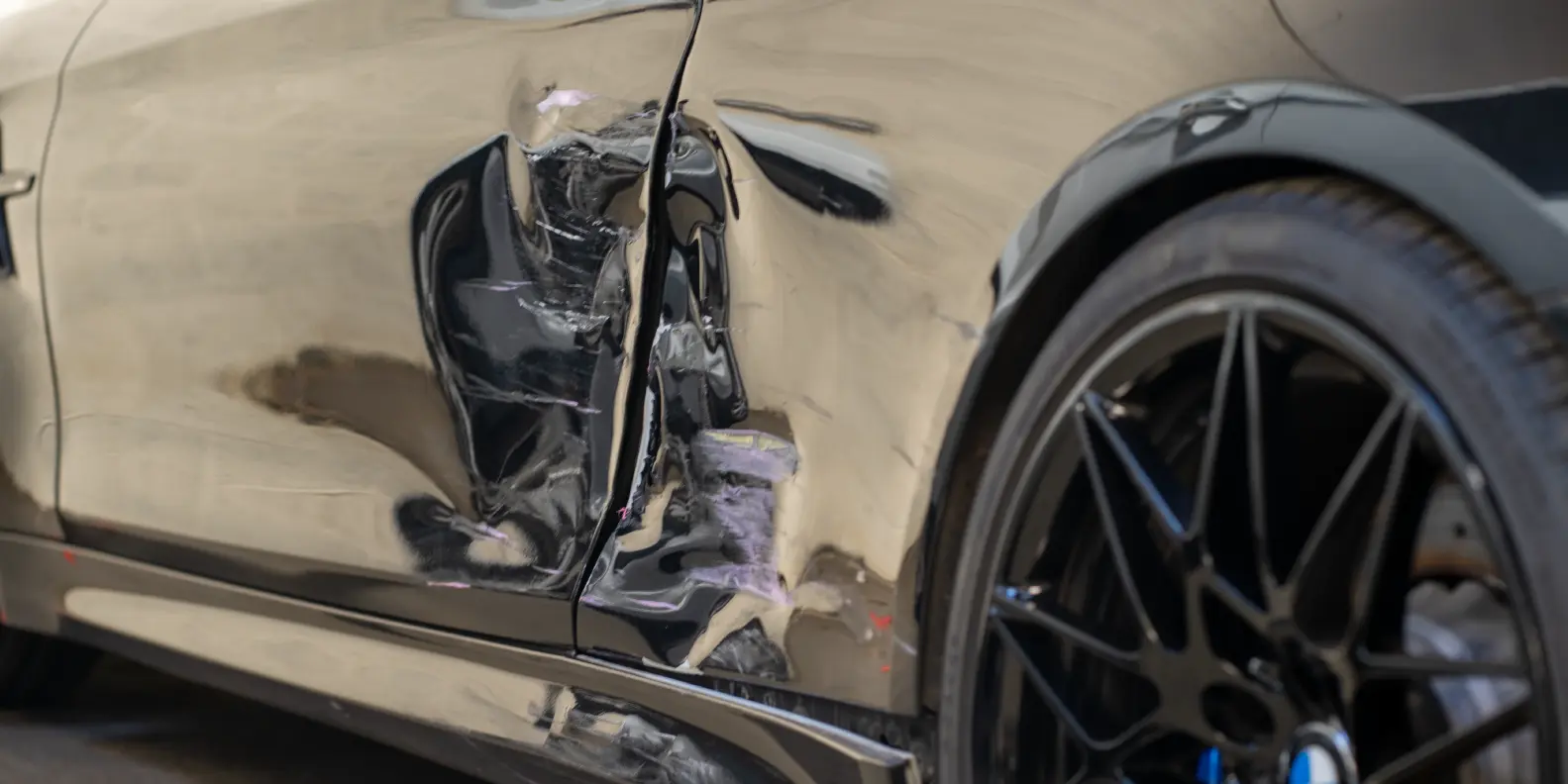
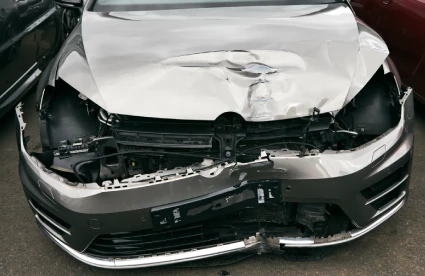
If your vehicle is declared a total loss after an accident, it’s natural to have questions about what this means for you and your claim. Don’t worry – we’re here to guide you through the process and make things as straightforward as possible.
In this guide, we’ll explain what a total loss means, clarify key terms, the total loss process, and show you how we can help you secure a replacement vehicle at no cost to you.
A car is usually declared a total loss – commonly known as a “write-off” – for one of two reasons:
The vehicle is deemed ‘beyond economical repair.’ This means the cost of repairs would exceed the car’s pre-accident value (PAV).
What does “beyond economical repair” mean?
“Beyond economical repair” refers to a vehicle where the cost of repairs is higher than what is considered financially reasonable, usually exceeding 60–75% of its pre-accident value (PAV). This is a common term used by insurers and claims management companies to assess whether a vehicle is worth repairing.
For example, if a car had a pre-accident value of £2,000 and the repair costs were estimated at £1,600 (80% of its PAV), it would likely be classified as a total loss – beyond economical repair.
The damage is too severe to be safely repaired.
What does ‘too severely damaged to safely be repaired’ mean?
If a vehicle has extensive damage – such as structural damage – it may not be possible to restore it to a roadworthy condition. In these cases, the car is written off to ensure it doesn’t pose a safety risk to anyone, including drivers, passengers, and pedestrians. This decision prioritises the safety of all road users.
Roadworthy and unroadworthy total loss
After an accident, a car can be classified as either a roadworthy total loss or an unroadworthy total loss, depending on the extent of the damage.
Unroadworthy total loss
A vehicle in this category cannot be legally or safely driven on UK roads due to the severity of the damage. In some cases, the car cannot be repaired to a safe standard, or the cost of repairs would be uneconomical.
This means the car is still safe to drive in its current condition but has damage that makes repairs uneconomical when compared to its pre-accident value.
The process for declaring a vehicle a total loss involves two key steps: assessing its repairability and determining the economic viability of repairs.
Is it safe to be repaired?
A qualified engineer will inspect your vehicle to assess whether it can be safely repaired. If the damage is deemed too severe to restore the car to a safe condition, it will be reported as a total loss at this stage.
Is it economically viable to repair?
If the car is deemed repairable, the engineer will estimate the repair costs. Your claim team will then calculate the vehicle’s pre-accident value (PAV). The repair estimate is compared to the PAV to determine whether the repairs are financially viable.
How the pre-accident value is calculated
Factors engineers would consider
The pre-accident value reflects your vehicle’s worth before the accident. Engineers consider several factors, including:
Any other relevant details affecting the vehicle’s value
How to ensure fair and accurate pre-accident valuation?
When you make your claim with Auto Claims Assist, we go the extra mile to ensure your car receives a fair and accurate pre-accident valuation. Whereas, Insurers often provide lower PAV assessments. This can impact:
Whether a car is repaired or written off in the first place
A reduced total loss settlement payout
Looking for a fair valuation and settlement?
If you have a non-fault accident, speak to our specialist to get a fair, independent pre-accident value (PAV) calculation.
Under the Salvage Code established by the Association of British Insurers (ABI), a vehicle declared a total loss is assigned one of the following categories after inspection by a qualified engineer:
Category A (Scrap)
The vehicle is severely damaged, unsafe to drive, and beyond repair. It must be completely scrapped, with no parts salvaged or reused.
Category B (Break)
The vehicle is severely damaged, unsafe to drive, and beyond repair. While the car itself must be scrapped, some parts may be salvaged and reused.
Category S (Repairable Structural Damage)
The vehicle has structural damage, such as a cracked chassis, which can be repaired. However, repairing it may not be economically viable (This was previously known as Category C before 2017).
Category N (Repairable Non-Structural Damage)
The vehicle has non-structural damage, such as electrical faults, that can be repaired. As with Category S, repairs may not be financially worthwhile (This was previously known as Category D before 2017).
These categories help clarify the extent of the damage and the potential for repair or reuse of parts.
Making A Non-Fault Total Loss Claim
Straight after an accident, it’s unlikely you’ll know whether your car is a total loss. This determination is made after you begin the non-fault claim process. A qualified engineer will assess the damage to decide if your vehicle is repairable or should be classified as a total loss.
We manage your non-fault total loss claim, from start to finish
At Auto Claims Assist, we take the stress out of handling your total loss claim by managing every detail for you. From the moment you contact us, we’ll guide you through the process, ensuring you stay informed and supported every step of the way.
Yes. Independent engineers assess your car to ensure fairness.
No. Their service doesn’t prioritise calculating fair valuation.
No. Valuation often prioritises reducing their payout.
Protects your no-claims bonus
Yes. No impact as claims are made directly against the at-fault insurer.
No. Your policy may be affected until liability is resolved.
No. This option is not designed to protect your policy.
Provides a like-for-like replacement vehicle
Yes. A like-for-like vehicle is provided while your claim is processed.
Sometimes. May depend on your policy and additional coverage.
Rarely. Typically does not offer replacement vehicles.
Arranges vehicle recovery
Yes. 24/7 recovery arranged if your vehicle is unroadworthy.
Sometimes. May depend on your policy and additional coverage.
No. You’ll need to arrange your own recovery and claim it back.
Manages all communication
Yes. Handles all communication with a dedicated handler.
Sometimes. Handles communication but no dedicated handler.
No. Communication is usually client-led and can be complex.
Avoids paying excess upfront
Yes. No excess is required.
No. You may need to pay your policy excess initially.
Yes. They do not operate through your policy.
Handles everything start to finish
Yes. Full accident management, including paperwork and updates.
Limited. Covers only certain aspects, and you may need to liaise with third parties.
No. Typically limited to handling their liability alone.
No cost to you
Yes. All costs claimed from the at-fault driver’s insurer.
No. You may face excess payments and policy premium increases.
No. They do not cover additional services like recovery or hire.
Specialises in non-fault claims
Yes. Dedicated to managing non-fault claims.
No. Primarily designed to manage claims under your own policy.
No. Their priority is limiting their liability.
Independent engineers and fair pre-accident value settlements
Our team works with independent engineers to assess your vehicle, determine whether it’s a total loss, and ensure a fair pre-accident valuation. We liaise directly with the at-fault driver’s insurer, handling all communication and paperwork to save you time and hassle.
When you claim with Auto Claims Assist, everything comes at no cost to you. All associated expenses – such as vehicle recovery, storage, replacement hire, claims management and your total loss settlement – are claimed directly from the at-fault driver’s insurance.
At Auto Claims Assist, we’re proud to help thousands of drivers successfully navigate the process of claiming for a non-fault total loss car accident. Our dedicated approach ensures every customer receives the support they need.
“I honestly cannot emphasise how brilliant this company has been. I stumbled across Auto Claims Assist as I really didn’t want to go through my insurance and lose my excess and have my premiums go up. (I was hit by another driver through no fault of my own and my car was a complete write off). I read the reviews and went for it.
Having been through the process and upon receiving my payout I cannot believe how easy it’s been. They were fast in getting a replacement car out to me which was a brand new version of my car at no cost to myself and Ron my case handler called me frequently to tell me how they were getting on with the other party’s insurer.
To make things better, I was unhappy with the initial ‘market’ valuation I received from the other insurer which was very low, Taya at Auto Claims Assist fought my corner in getting a higher figure for me and will now be able to get a like for like car to replace it. I will always go down this route if I ever get into a similar situation (but hopefully not!) Massive thank you to Ron, Taya and Chloe keep up the good work!”
“Perfect company. All the team were really helpful. My case handler Shadane was amazing. Kept me updated throughout. I received a hire car within a day of my case being filed. My car ended up being a write off and I actually received a lot more than I expected to which was a bonus!”
“Toni and her team were amazing and big help with my claim. My car was a write off and they sorted everything out. Always answered my emails or phone calls. Big thank you.”